
Ain’t No New Black Panthers
Why Mimicry Fails and the Struggle Endures

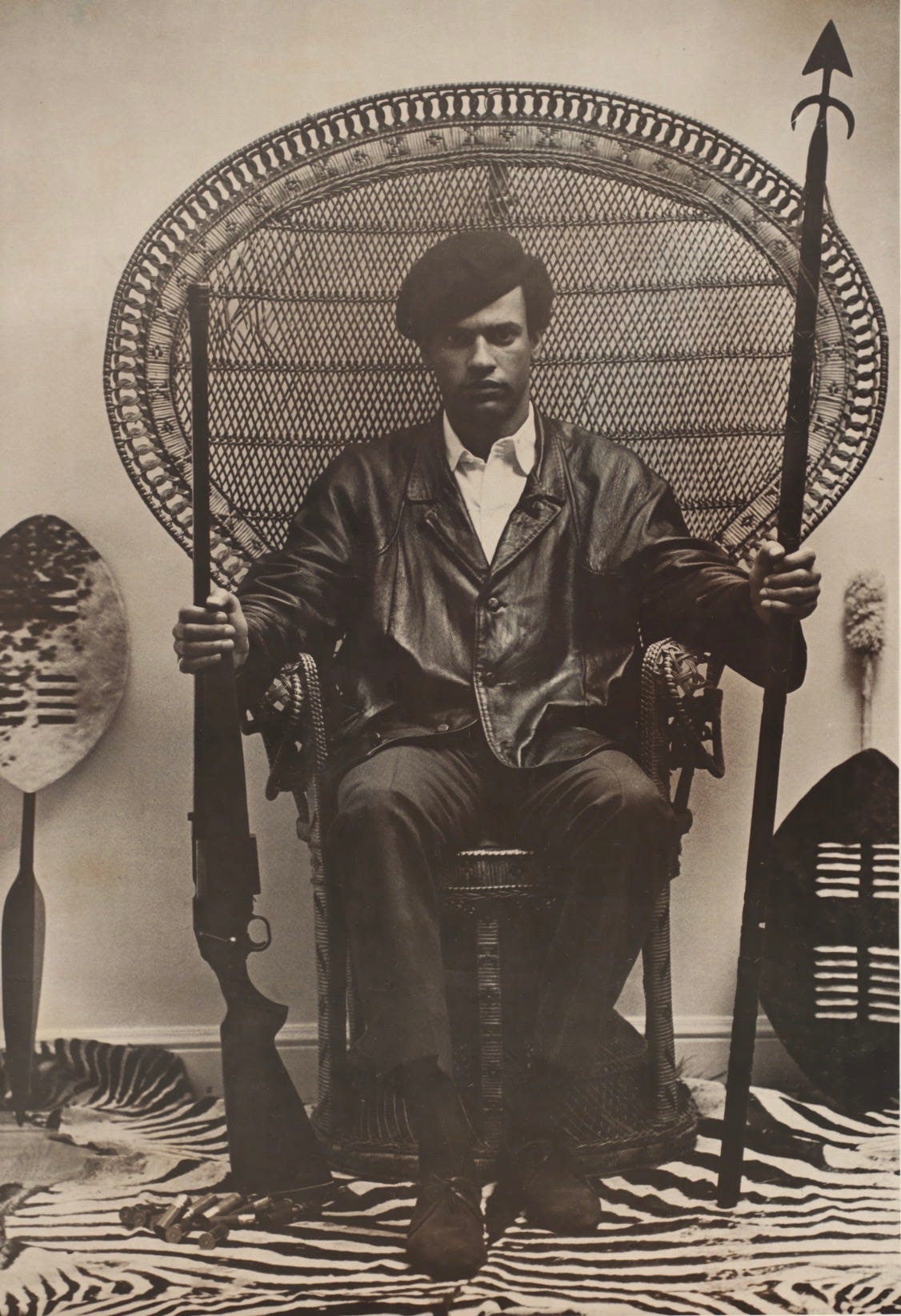
by Floyd Webb
“The revolutionary is not a man who dreams of the past, but one who seeks to shape the future.”
— Frantz Fanon (paraphrased from Fanon’s political essays)
I am not writing this as an observer. At seventeen, I worked with the National Committee to Combat Fascism alongside Black Panther Party members in suburban Chicago. Later, I lived and worked in Europe and East Africa during the mid-to late 1970s. I have seen movements up close—how they build, how they fracture, and how spectacle accelerates collapse. This essay comes from that vantage point.
Every period of political rupture produces the same announcement: the Panthers are back.
The claim feels intuitive: conditions resemble the past, violence is visible, legitimacy collapses. Surely the old organizations must return. But this intuition misunderstands how political inheritance actually works. What we are witnessing is not resurrection. It is mimicry—and mimicry, under conditions of repression, is lethal. History is a lesson but not a manual, our mission itself must be regenerated in the present, under present conditions.
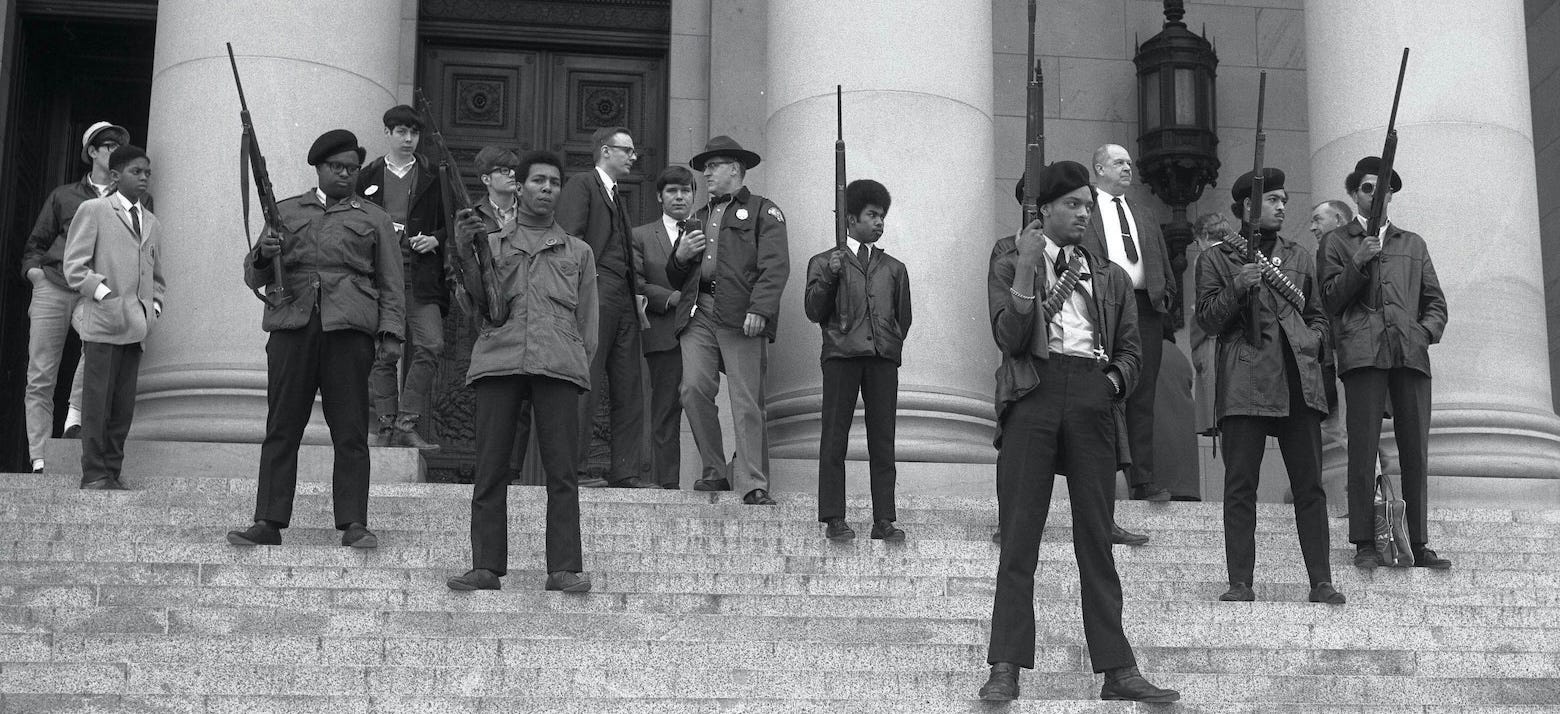
The original Black Panther Party was not an aesthetic response to crisis. It was infrastructure built inside one. What appears today as revival is historical cosplay: the appropriation of names, symbols, and militant posture without the organizational metabolism that sustained them.
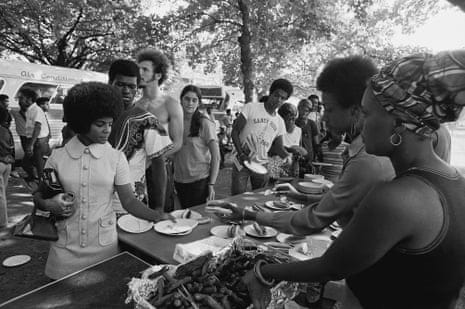
History does teach. But it teaches in patterns, not prescriptions. It offers judgment, not choreography. To treat history as instruction is to mistake lessons for scripts—to copy names, symbols, and tactics without rebuilding the conditions that once made them effective. That confusion is how imitation replaces inheritance. Learning from history means adapting its principles to present conditions, not reenacting its forms under different ones.
This is not about bad intentions.
It is about selection pressure.
Mimicry as Warning Signal
Claims of revival do not tell us what is being built. They tell us what has returned: repression, instability, racialized state violence, and a collective hunger for coherence. Mimicry functions less like inheritance and more like a seismograph. It registers tremors. It does not reinforce foundations.
Two recent formations make this visible.
The New Black Panther Party adopted the name and iconography of the Panthers without inheriting their organizational logic. The name did the work the structure could not. It produced instant gravity—media attention, symbolic authority, predictable fear responses—while bypassing the slow accumulation of legitimacy inside Black communities.
During the George Floyd uprisings, the Not Fucking Around Coalition illustrated the same logic through a different vector: militant spectacle rather than nominal inheritance. The moment was real. The legitimacy crisis was undeniable. But armed display arrived before organizational sequencing.
This is not to say these formations contained no sincere individuals or performed no useful actions. It is to say that their foundational logic—prioritizing symbolic resonance over durable structure—doomed them to a predictable cycle of fragmentation and collapse.
In both cases, the problem was not missteps.
The problem was founding logic.
These were not organizations that made mistakes.
They were formations that had to make these mistakes, because mimicry selects for visibility before capacity.
Which brings us to the mechanism that explains the pattern.
Spectacle Logic vs. Cadre Logic
The recurring failures of mimetic formations stem from a collision between incompatible political logics—one rooted in survival, the other in the attention economy.
What often gets called “celebrity logic” is better understood as spectacle-logic: the logic produced by social media capital, algorithmic visibility, and the pressure to perform relevance in real time.
Spectacle-logic is governed by immediacy. It treats attention as legitimacy, visibility as power, and repression as proof of relevance. It selects for personalities who thrive under spotlight conditions and collapse under duration.
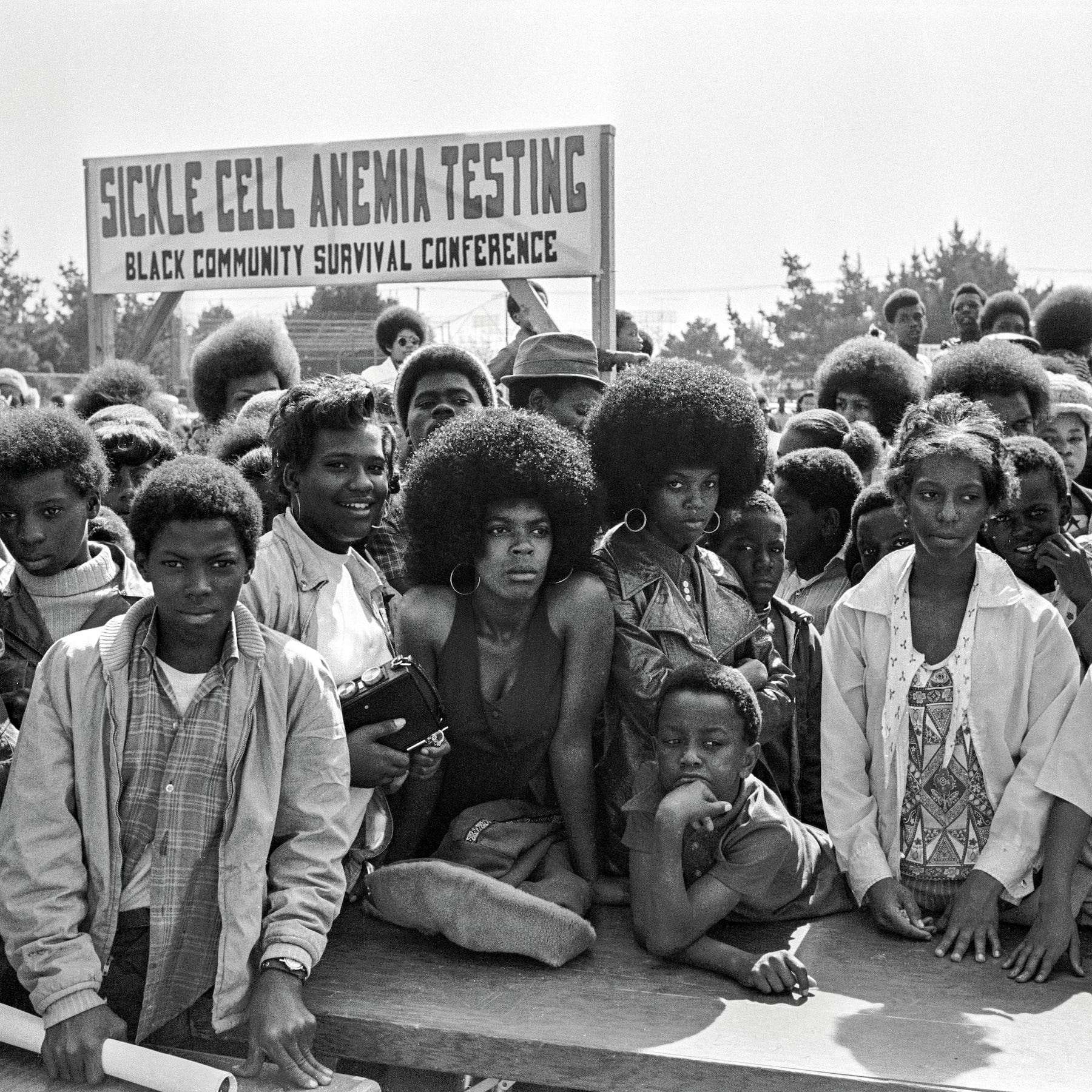
Cadre logic is governed by time. It treats preparation as survival, discipline as protection, and anonymity as strength. It selects for people willing to work without recognition, endure pressure without applause, and build capacity before confrontation.
The people attracted by spectacle are not the people required by duration.
Spectacle-logic almost never converts into cadre logic because the selection pressure is too strong. Once visibility arrives, formations are flooded with participants optimized for performance, not endurance. Education cannot outpace exposure. Discipline cannot outpace amplification.
Celebrity logic collapses under pressure because it cannot metabolize repression.
This is why mimicry is not merely ineffective.
It is predictively dangerous.
The Predictive Consequences of Performative Mimicry
If these formations failed only in theory, their collapse might be debatable. But they did not fail abstractly. They failed predictably.
The New Black Panther Party did not evolve into a durable political organization. It did not build parallel institutions capable of outliving leadership disputes or media cycles. It did not leave behind survival infrastructure that migrated into other movements once attention faded.
Instead, it followed the standard arc of mimetic politics:
fragmentation into personality-driven factions
isolation from serious organizing networks
reliance on symbolic provocation in place of base-building
gradual disappearance into marginal controversy
Today, it exists primarily as a reference point—invoked by critics, occasionally surfaced by media, but functionally absent from sustained community defense or survival work.
The NFAC followed the same trajectory—only faster.
Because it emerged during a mass uprising, compression was extreme. Visibility arrived immediately. Surveillance followed instantly. Internal contradictions surfaced under pressure, without any buffering infrastructure to absorb them.
There was no second phase.
No quiet rebuilding.
No embedded programs revealed once the cameras left.
NFAC did not collapse because repression arrived.
It collapsed because repression arrived before structure existed.
Visibility without capacity is a funnel for repression.
This is not hindsight.
It is arithmetic.
Revolutionary Suicide: The Fatal Misreading
No concept has been more catastrophically misunderstood than revolutionary suicide.
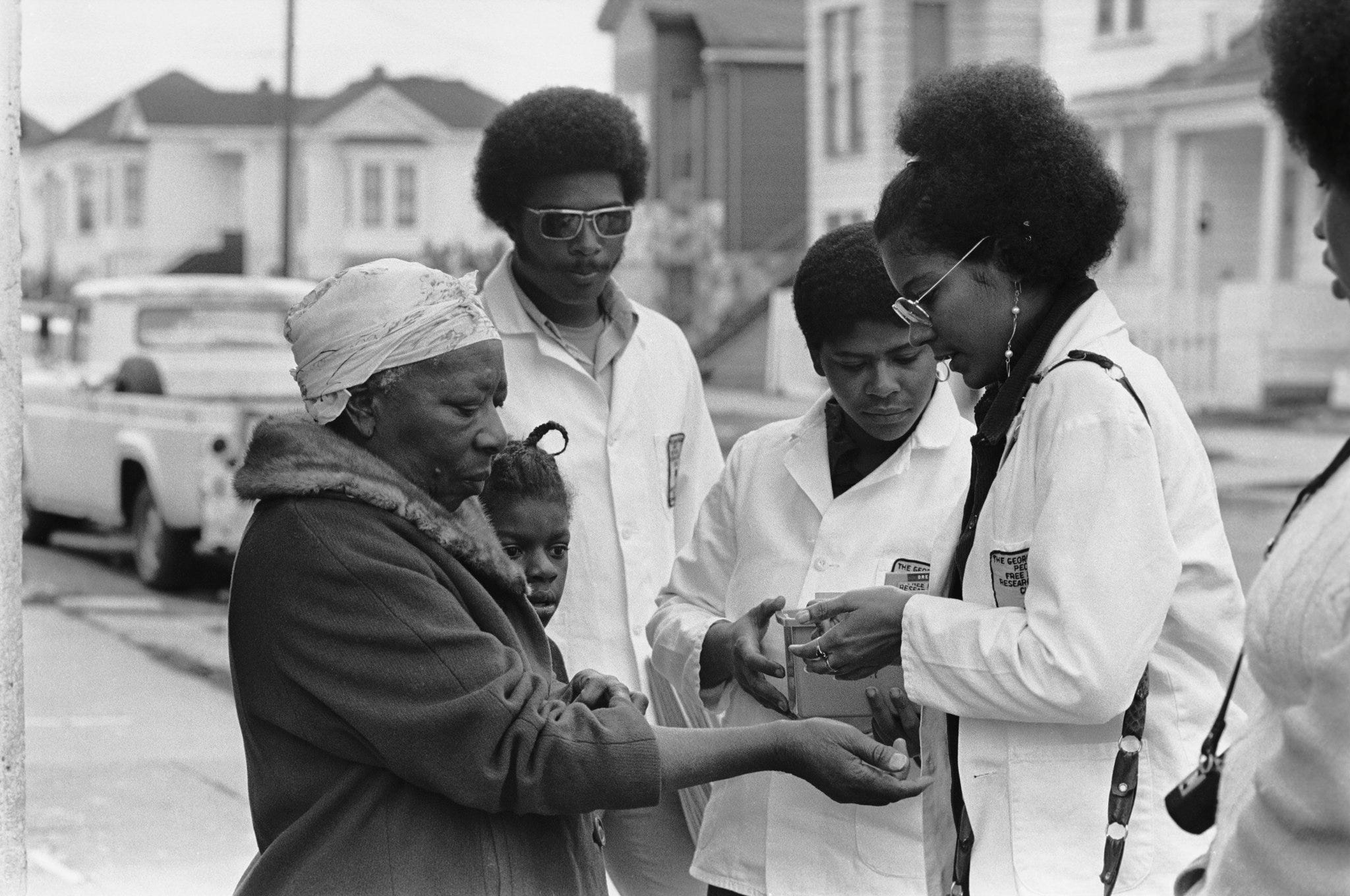
When Huey P. Newton introduced the term, he was not advocating martyrdom. He was naming a psychological technology: the refusal of internalized death under domination.
Revolutionary suicide described the choice to maintain agency, discipline, and collective purpose in a system designed to produce despair and submission. It was a theory of how to stay alive politically under constant threat.
In practice, this meant:
sustaining political education under surveillance
running survival programs despite harassment
maintaining internal discipline when provoked
refusing despair without courting annihilation
Modern misreadings invert this logic. Revolutionary suicide becomes fatalism masquerading as militancy—risk without preparation, confrontation without infrastructure, death confused for commitment.
This inversion is not radical.
It is lethal.
The Architecture of Survival
The question most writing avoids is the only one that matters: why do some formations survive repression while others collapse immediately?
The answer is architecture.
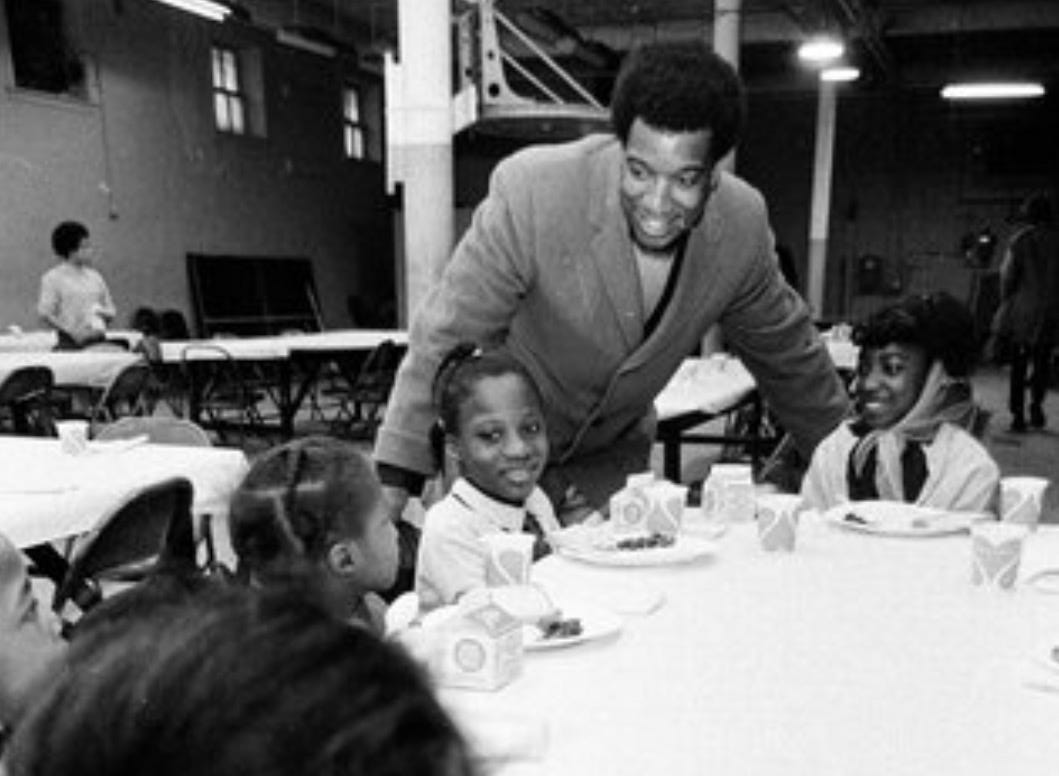
Durable survival follows a sequence, not a checklist.
Risk reduction
The Panthers’ Free Breakfast Program was not charity. It was base-building. It made organizers legible and trusted before asking for commitment.Institutional shielding
Legal defense funds and bail infrastructure meant people could take risks knowing they would not be abandoned. This was not paranoia—it was arithmetic.Internal discipline
Political education was not indoctrination. It was ensuring people understood why they were risking repression, which is the only thing that sustains people when repression arrives.Managed visibility
Exposure was calibrated to capacity—not avoided, but delayed until it could be survived.Physical defense, if necessary
Subordinate to the above—not its replacement.
Survival is not the moment when weapons appear.
It is the long sequence of decisions that make that moment survivable—or unnecessary.
The real calculation serious organizers face is not whether repression will come, but whether enough capacity exists to absorb it without collapse.
What Inheritance Actually Looks Like
Inheritance, then, looks less like a uniform and more like a toolkit.
It is the patient adaptation of the Panthers’ metabolic principles—political education as shield, mutual aid as base-building, managed visibility—to 21st-century conditions. It is visible in community bail funds, tenant union networks, disaster-response collectives, and quiet mutual-aid formations that operate with discipline and avoid the spotlight.
These formations rarely generate headlines.
They build the capacity to survive headlines when they come.
A Simple Diagnostic Test
If this essay is useful, it should be usable.
Visibility Audit: Is our media profile proportionate to our internal education, care, and accountability structures?
Repression Prep Test: If three key organizers were arrested tomorrow, do we have legal, financial, and communication protocols to sustain operations?
Continuity Question: If the most visible figure left, would the organization survive based on shared ideology and systems rather than personality?
If the answer to these questions is no, the problem is not courage.
It is sequence.
Conclusion: Survival Is Not a Performance
By this point, the stakes should be clear. The New Black Panther Party and the NFAC are not merely failed experiments. They are warnings.
They show what happens when people mistake historical reference for historical understanding—when they confuse the Panthers’ image with the Panthers’ metabolism.
If you organize this way, you will not just fail.
You will accelerate the destruction of the people who trust you.
The work continues.
Just not where cameras are looking.
It continues in the unglamorous accumulation of capacity: legal funds, educational infrastructure, conflict-resolution systems, mutual-aid networks that do not trend. It continues among people who understand that survival is not cinematic.
It continues in the refusal to mistake performance for power, visibility for capacity, or spectacle for survival.
Notes & Citations
Huey P. Newton, Revolutionary Suicide (1973)
Joshua Bloom & Waldo E. Martin Jr., Black Against Empire
Donna Murch, Living for the City
FBI COINTELPRO Records (1967–1971)
Further Reading
Cedric Robinson, Black Marxism
Charles E. Cobb Jr., This Nonviolent Stuff’ll Get You Killed
Robin D.G. Kelley, Freedom Dreams
Keeanga-Yamahtta Taylor, From #BlackLivesMatter to Black Liberation
Adolph Reed Jr., essays on movement institutionalizationAn
The Black Panther Party's effectiveness came from their systems thinking - free breakfast programs, health clinics, legal aid - creating parallel institutions that served real needs while revealing state failures. Their discipline around uniforms, community programs, and internal education wasn't aesthetic; it was infrastructure. What parallel institutions could we build today that would be equally impossible to ignore?
You have to be wary of anyone, regardless of age, resume, or proximity to history, who spends more time policing Black people doing work than confronting the systems killing us. Especially when that critique flows downward, not upward.
What’s being done here isn’t protection of legacy. It’s delegitimization through comparison. And that move has a long history. if you don’t look, sound, or organize exactly like a image from the past, then you’re framed as fake, reckless, or dangerous. That logic doesn’t defend Black life, it narrows who is allowed to resist.
The reality is this there is no single authorized form of Black struggle. The original Panthers themselves evolved, disagreed, fractured, and adapted to conditions. Treating them like a museum exhibit instead of a living political lineage is itself ahistorical.
You don’t erase real community work because it doesn’t fit your preferred model. Mutual aid, protection, food distribution, court support, and local organizing don’t stop being valid because they aren’t branded the way you like or because they didn’t emerge from the same decade, city, or leadership circle.
And let’s be honest about motive.
Who benefits when Black formations are publicly dismissed as unserious, dangerous, or illegitimate by other Black people?
Who benefits when nationalism is framed as inherently suspect, but global solidarity is only acceptable when it’s abstract and non-threatening?
Who benefits when critique focuses on aesthetics and symbolism instead of material outcomes?
Because it’s never the community.
Calling something “spectacle” is easy. Building trust is slow. But you don’t get to ignore lived impact because it doesn’t match your theory. You don’t get to imply people are disposable learning curves while claiming to care about survival.
And let’s be clear uplifting the state’s framing whether intentionally or not by amplifying narratives that paint Black organizers as reckless or fraudulent is not radical. It’s familiar. We’ve seen this before. It’s how movements get isolated while repression stays untouched.
If someone is serious about legacy, the question isn’t “does this look like the Panthers?”
The question is Who is feeding people? Who is showing up? Who is rooted? Who is accountable to the community they serve?
Anything else is just commentary.