
Parks, Paychecks, and Chicago’s Future
What one summer revealed about youth jobs, neighborhood life, and how cities change

By Floyd Webb
Author’s Note
This essay was written during a summer when the national political atmosphere often felt chaotic. Federal immigration enforcement operations and other tensions briefly shook the city, producing headlines that suggested instability and crisis. Yet moving through Chicago’s neighborhoods revealed a different reality. Parks were full. Beaches were busy. Young people were working across the city. Visitors continued to arrive from around the world. The turbulence of the moment shook the city—but it did not break it. What I saw instead was something older and more durable: the quiet civic infrastructures that help cities hold together when the pressure rises.
Last summer something subtle shifted in Chicago.
You could feel it in the parks.
Field houses were alive. Kids ran across baseball diamonds. Parents unfolded lawn chairs along the baselines. Lifeguards climbed back onto their chairs along the lake. Recreation programs were running the way I remember them from childhood.
Even the small things felt different.
At one park I discovered a photography darkroom program where people were developing film and printing photographs in chemical trays—actual analog photography. I hadn’t seen a functioning darkroom in a neighborhood park in decades. It reminded me of an earlier Chicago, when park field houses were places where you could learn almost anything: photography, woodworking, ceramics, theater.
Driving through the city that afternoon, I realized I wasn’t just seeing happy kids in the parks. I was seeing the visible result of a policy choice to invest in them.

When parks are active and young people are working, the entire atmosphere of a city changes.
There was a practical reason.
Mayor Brandon Johnson expanded the city’s One Summer Chicago youth employment initiative, which connects tens of thousands of young people ages 14–24 with summer jobs across city agencies, nonprofit organizations, and private employers.
One of the most visible impacts appeared in the parks.
The Chicago Park District hires thousands of seasonal workers—lifeguards, recreation leaders, junior laborers, and camp staff—to operate pools, beaches, field houses, and neighborhood programs.
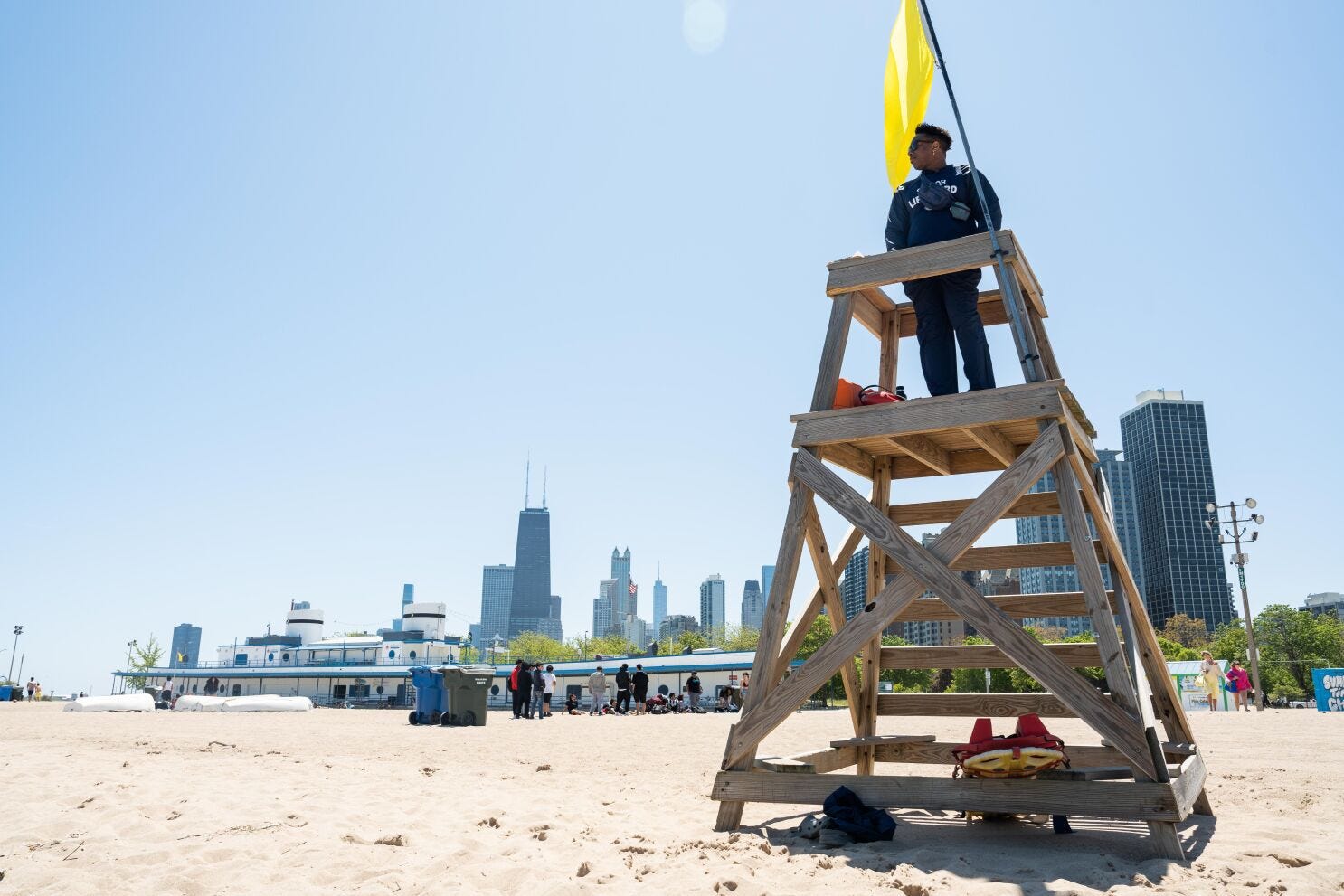
Those workers were visible everywhere.
Lifeguards on the stands along the lake.
Counselors running day camps.
Teenagers maintaining ball fields and helping run neighborhood programs.
The effect was immediate.
Parks stayed open. Pools stayed staffed. Neighborhood programs ran at full capacity.
Most importantly, thousands of young people had somewhere to be in the morning.
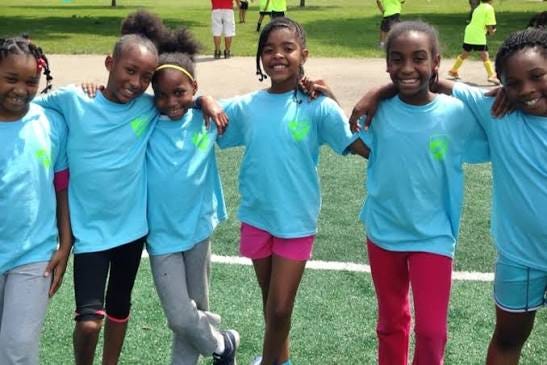
Chicago’s parks have always been more than open green space.
The field houses scattered across the neighborhoods function as small civic centers—places where the rhythms of community life unfold. Kids learn dance. They learn basketball there. Seniors gather for chess and exercise classes. Teenagers find rehearsal space, art programs, and summer jobs.
For generations of Chicagoans, the field house has been the neighborhood’s unofficial town hall.
When those buildings are active—when the lights are on, the programs are running, and young people are working inside them—the surrounding neighborhood stabilizes around that activity.
In Chicago, the park field house has long been the closest thing many neighborhoods have to a public commons.
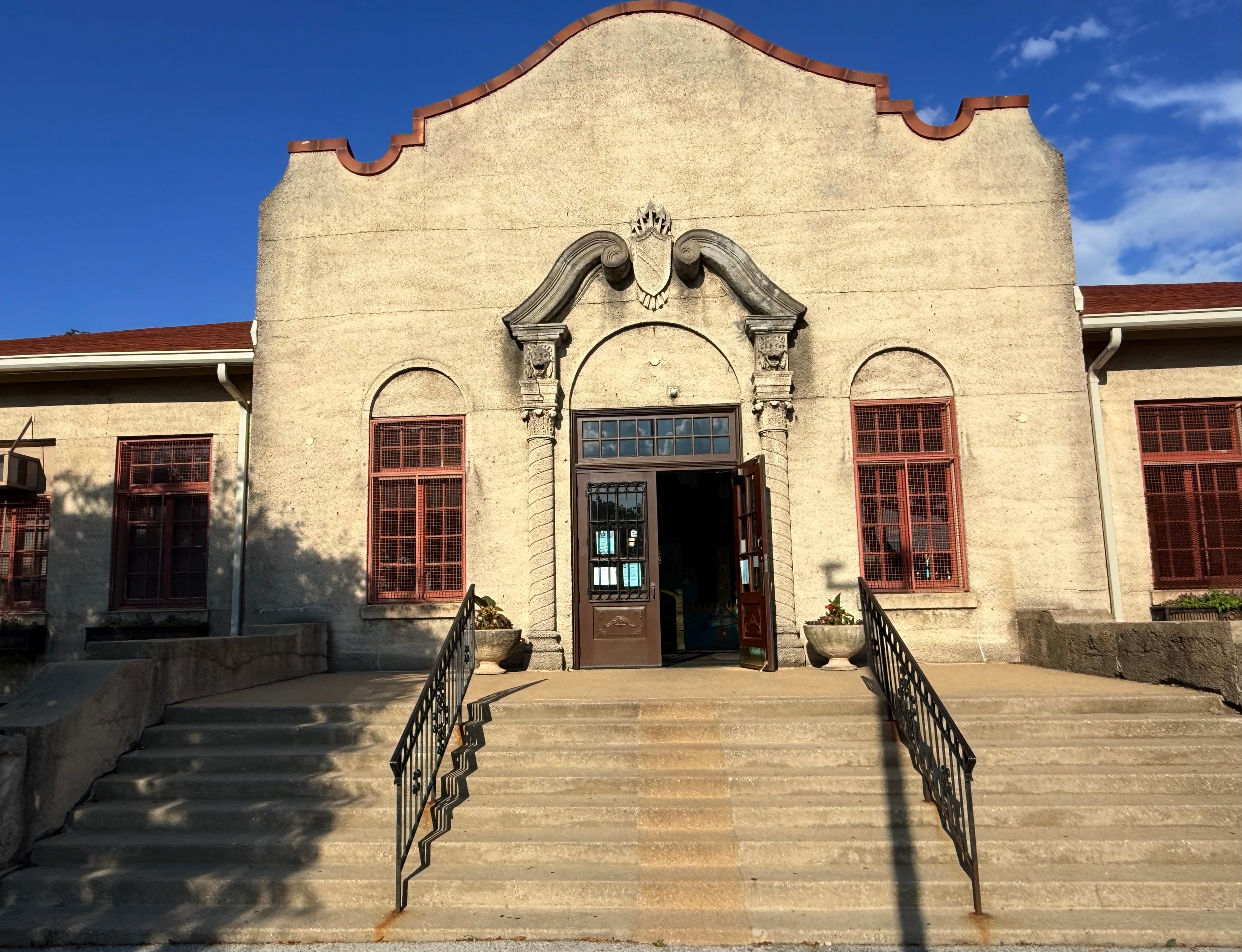
At Tuley Cultural Center on the South Side, that revival was especially striking.
Tuley Park itself reflects an earlier Chicago idea—that neighborhood parks should be more than open land. They were designed as civic institutions, places where recreation, education, and community life could unfold under the same roof.
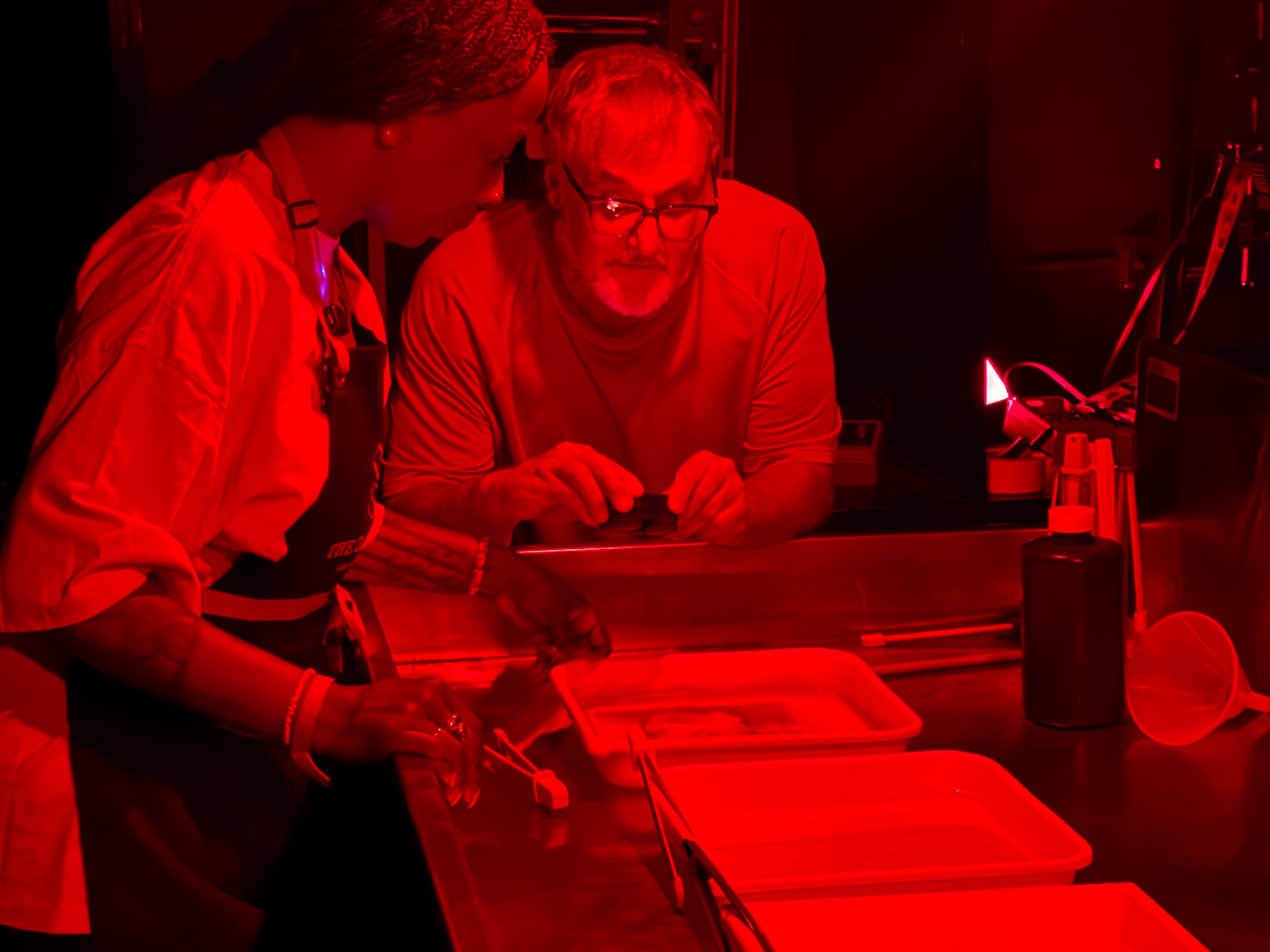
The park’s photography darkroom—long dormant—has been brought back to life by Chicago photographer and educator Rosondunnii Marshall, founder of The Darkroom Chicago.
What began as informal gatherings of friends experimenting with film photography has grown into a community space where people learn to develop 35mm film together.
When I stepped inside, the room was alive with activity.
People moved in and out carrying trays and prints. Someone held up a photograph to the light. Conversations drifted across the room as photographers compared exposures and compositions. Marshall moved easily from table to table offering advice.
It wasn’t simply a photography class.
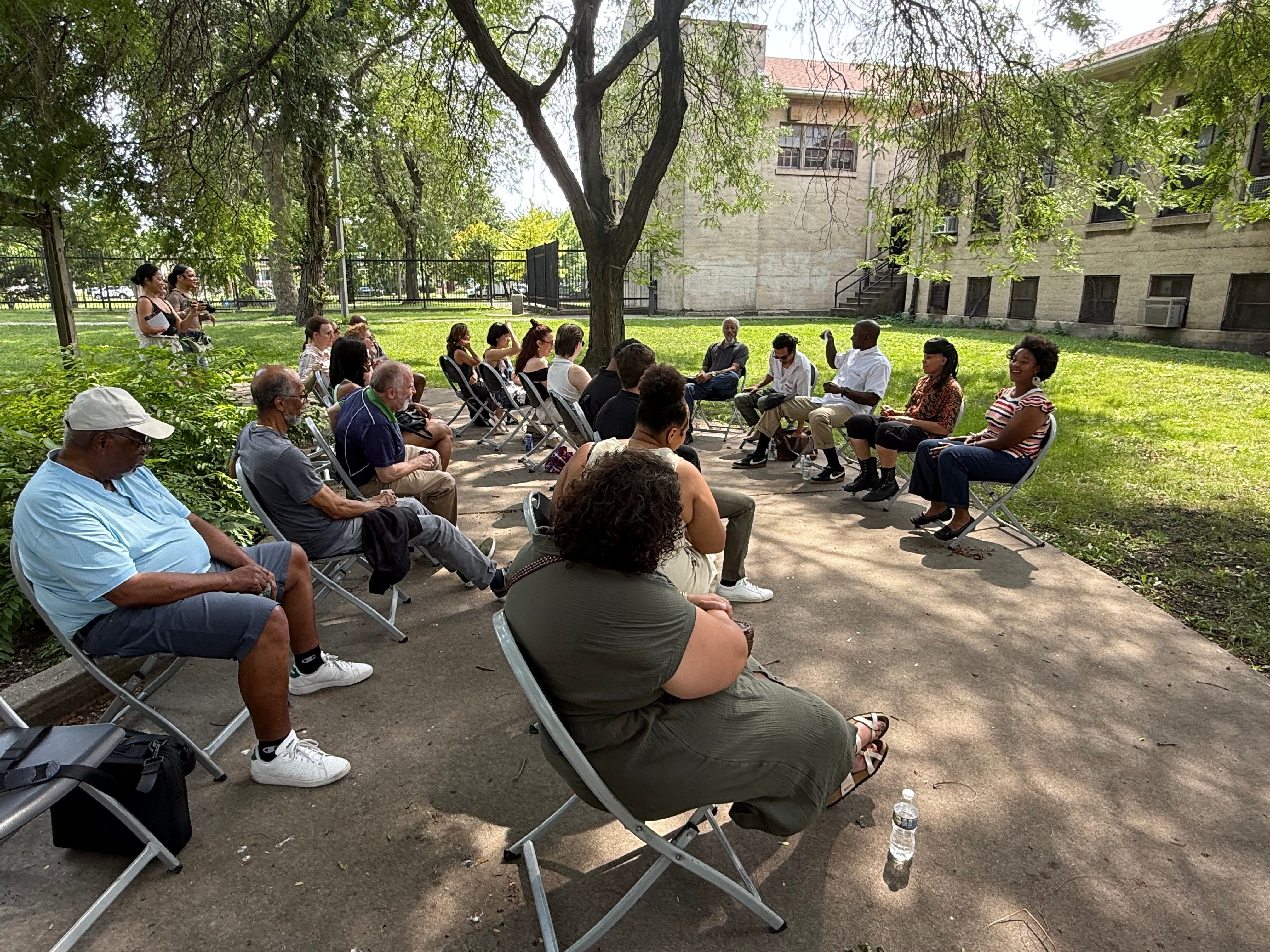
It was something Chicago parks once excelled at—a place where curiosity, skill, and conversation slowly turn strangers into a community.
While the darkroom hummed with activity on the South Side, many American cities were heading in the opposite direction.
Youth employment and recreation programs were among the first budgets cut when municipal finances tightened. Pools closed. Recreation centers reduced hours. Summer jobs shrank or disappeared altogether.
In cities from Philadelphia to Los Angeles, officials have struggled with the consequences—large groups of teenagers gathering in commercial districts and entertainment zones with few alternatives during the summer months.
The phenomenon is often described as a “teen takeover.”
But the phrase does something more troubling.
It criminalizes the absence of civic infrastructure.
When cities reduce the institutions that structure youth time—parks, recreation programs, summer jobs—young people do not disappear.
They simply reappear somewhere else.
Chicago’s decision to expand youth employment rather than shrink it suggests a different path.
When I was young, I remember standing around with older friends in the neighborhood when someone would suddenly say they had to leave.
“Man, I can’t go. I gotta work Monday. I gotta get that check.”
And just like that they were gone.
Work had gravity.
A paycheck could pull someone away from trouble faster than any lecture or warning.
A job doesn’t just put money in someone’s pocket.
It reorganizes time.
It reshapes priorities.
It anchors a life to the future.
Give young people somewhere to be in the morning, and the city won’t spend the night asking where they’ve been.
Research has shown for years that youth employment programs reduce violence. A randomized study conducted by the University of Chicago Crime Lab found that participation in Chicago summer job programs reduced violent crime arrests among participants by 43 percent over the following year.¹
Work has gravity.
That gravity—the pull of a job, a routine, a future—has always been the force that shaped this city. Chicago was built by it, literally.
Railroads converged here. Freight yards spread across the landscape. Truck routes carved their way through the South and West Sides. Entire neighborhoods grew up around the industries that moved goods across the continent.
Generations of Chicago families built their lives inside those systems.
You could work on the railroads.
Drive trucks.
Load freight.
Maintain machinery.
These were not abstract industries.
They were the physical infrastructure of everyday life.
Every generation of Chicago has watched a new layer of transportation technology arrive—railroads, highways, container shipping—and each one quietly reshaped the city’s economy.
Another transportation revolution is taking shape on the horizon.
Autonomous vehicles are beginning to appear in American cities. Electric delivery fleets are replacing combustion engines. Warehouses and logistics centers increasingly rely on automated systems.
Like every transportation transformation before it, this one will create an entire ecosystem of new jobs.
The question is not whether these technologies will arrive. The question is who will build them.
Moments like this are where what I have elsewhere called Applied Afrofuturism begins.
Afrofuturism is often associated with music, art, and science fiction that imagine Black futures beyond the limits of the present. Its applied form asks a more practical question: how do we build the real institutions, technologies, and educational pathways that allow those futures to exist in the world?
The answer begins in places like the Tuley darkroom.
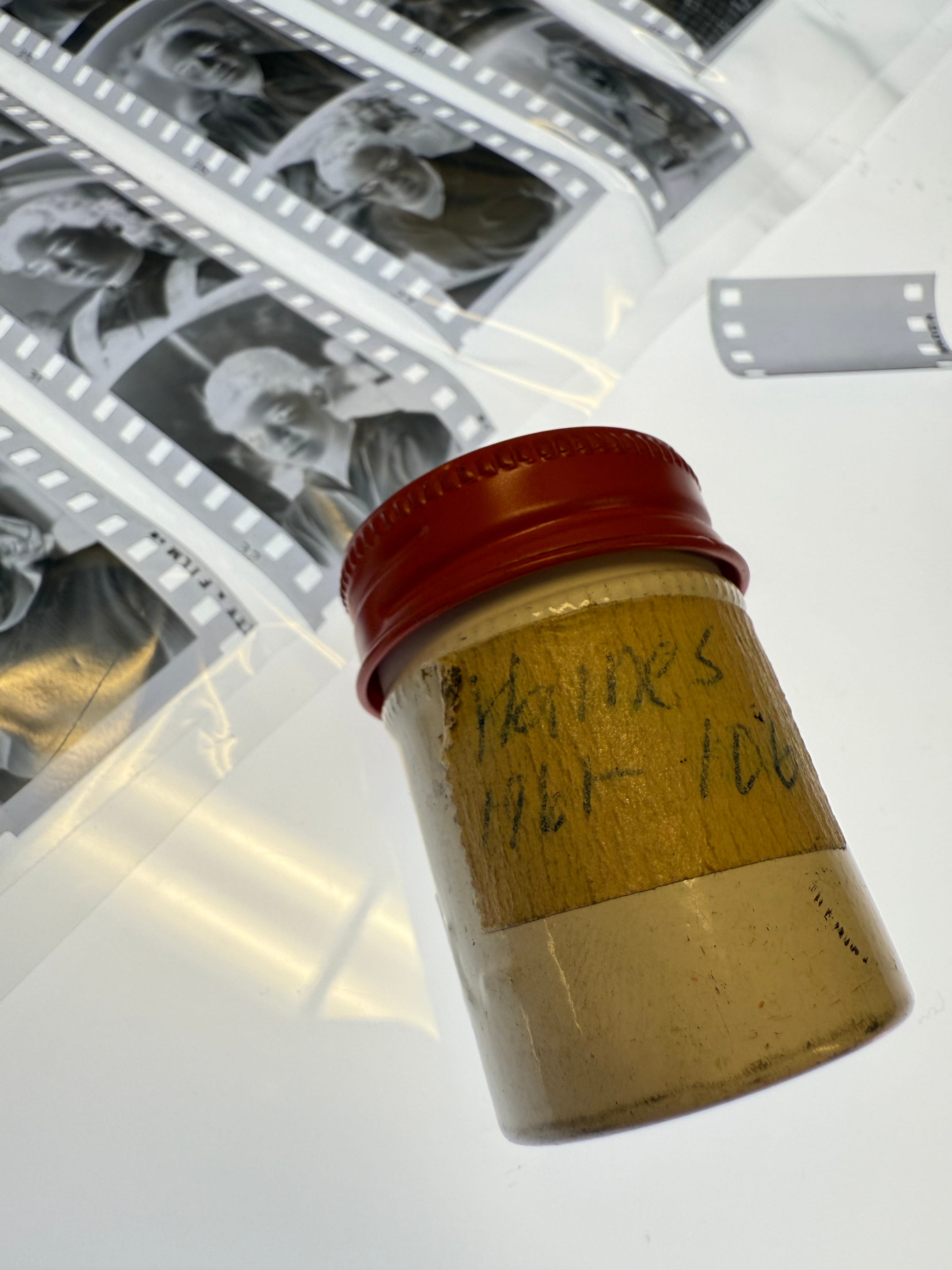
Learning to develop film is not just about photography. It teaches patience, precision, collaboration, and problem-solving. It teaches young people how to handle complex tools and processes, how to experiment and adjust until the image appears.
Those are the same habits of mind that every technological system requires.
This is what Applied Afrofuturism looks like in practice.
Not just imagining new worlds—but building the skills and institutions that allow them to exist.
Cities rarely change all at once. Sometimes they change one summer at a time.
By late afternoon the parks began filling again. Kids drifting toward basketball courts. Parents unfolding lawn chairs near the baseball diamonds. Lifeguards stepping down from their chairs as the sun moved toward the lake.
It was a reminder that cities become stable when the small infrastructures of everyday life are working: parks, jobs, and places where young people can imagine a future.
Chicago’s park system grew from an earlier belief—shared by planners like Frederick Law Olmsted—that public spaces were not luxuries but civic infrastructure.
If the city remembers how to invest in those spaces again, the young people learning and working in them today may be the ones designing the systems that move Chicago tomorrow.
For now, it was enough to watch the lifeguards step down from their chairs as the sun moved toward the lake, their work—and the city’s future—waiting for another morning.
Notes
¹ Sara B. Heller, Summer Jobs Reduce Violence Among Disadvantaged Youth, Science, Vol. 346, No. 6214 (2014), University of Chicago Crime Lab.
Further Reading
Civic Infrastructure, Youth Employment, and the Future of Urban Systems
Alain Bertaud. Order Without Design: How Markets Shape Cities. Cambridge, MA: MIT Press, 2019.
Urban planner Alain Bertaud explains how transportation networks, land use, and economic forces shape the structure of cities, offering a clear framework for understanding how infrastructure decisions affect opportunity and mobility.
Lawrence D. Burns. Autonomy: The Quest to Build the Driverless Car—and How It Will Reshape Our World. New York: Ecco, 2018.
A detailed insider account of the development of autonomous vehicle technology and the ways it may transform transportation systems, urban planning, and labor markets.
Jane Jacobs. The Death and Life of Great American Cities. New York: Random House, 1961.
A foundational text in urban studies arguing that lively streets, mixed-use neighborhoods, and active public spaces create safer and more resilient communities.
Eric Klinenberg. Palaces for the People: How Social Infrastructure Can Help Fight Inequality, Polarization, and the Decline of Civic Life. New York: Crown, 2018.
Klinenberg introduces the concept of “social infrastructure,” showing how institutions such as parks, libraries, and community centers strengthen neighborhoods and improve public safety.
Paul Mees. Transport for Suburbia: Beyond the Automobile Age. London: Earthscan, 2010.
A comparative study of transportation systems around the world demonstrating how transit policy and infrastructure shape economic access, equity, and urban development.
Donald Shoup. The High Cost of Free Parking. Chicago: Planners Press, 2005.
A classic work on transportation policy showing how parking and mobility infrastructure influence land use, economic activity, and the spatial organization of cities.
Sara B. Heller. Summer Jobs Reduce Violence among Disadvantaged Youth. Chicago: University of Chicago Crime Lab, 2014.
A landmark study demonstrating that summer youth employment programs significantly reduce violent crime involvement among participants while improving long-term educational and economic outcomes.
FYI Yesterday, Tuesday March 10, One Summer Chicago was renamed Chicago Youth Works.
Mayor Brandon Johnson said "The new name makes it clear that we are working to provide youth employment opportunity that extends beyond the summer months. Chicago Youth Works is how we build a more equitable future for our young people."
Applications @ https://www.chicagoyouthworks.org/
Lovely to hear about the darkroom at Tuley Park! We used to swim at that pool. Later, the park at 85th & King Drive opened. It was closer & though there was no pool, a big swath of ground became an ice skating rink in the winter. In the parks, kids (and adults) can learn to resolve conflict, take turns, compromise, win-lose. We all learn how to share space with others.