
The Ukraine Solution: Impunity Abroad, Impunity at Home
Why America’s tolerance for war crimes elsewhere always finds its way back across its own borders.


by Floyd Webb
A U.S.-backed peace plan that could grant amnesty to Russian forces in Ukraine isn’t just a diplomatic misstep—it’s a warning. What this administration is willing to excuse abroad, it is already normalizing at home. Around the world, nations facing authoritarian drift have confronted it with courage. Brazil—even with its deep flaws—managed to prosecute and imprison an election denier and coup plotter. The United States, facing the same test, chose impunity. The contrast reveals where democratic backsliding begins, and how it becomes irreversible unless we act while the law still belongs to us.
A Headline That Says More Than It Means To
On November 24, 2025, The Huffington Post ran a headline that should stop anyone who still believes in accountability:
“A proposed peace plan for Ukraine led by the United States has been met with anguish by many Ukrainians, who fear a post-war amnesty for Russian forces would erase accountability for alleged atrocities.”
The United States is entertaining the idea of amnesty for an occupying army accused of mass graves, torture sites, and systematic attacks on civilians. Whether framed as diplomacy, “peace pragmatism,” or geopolitical realism, the effect is the same:
“A plan that aligns with Russia’s strategic goal of avoiding accountability altogether.”
What matters is not the stated intent—
but the consequences.
This administration’s unconditional support for Israeli occupation tactics—combined with a peace plan that neutralizes accountability for Russian war crimes—should concern every citizen and every representative sworn to defend democratic norms.
Because what a government is willing to excuse abroad, it will inevitably normalize at home.
Exporting Impunity, Importing It Back
For decades, U.S. foreign policy has operated under a corrosive dynamic:
impunity practiced abroad becomes impunity cultivated at home.
Not through conspiracy, but through bureaucratic osmosis and institutional mimicry:
Agencies train with foreign counterparts who operate in legal gray zones.
Technologies designed for occupation—biometric surveillance networks, “smart” checkpoints, predictive threat systems—are imported for domestic policing.
Security doctrines shift from “public safety” to “population control.”
Once human rights become negotiable abroad, they become negotiable everywhere.
Example: Israeli-developed biometric systems and perimeter-sensing tools designed for the West Bank now operate along the U.S.–Mexico border.
The logic follows the hardware: classify first, justify later.
Systems built for occupation become instruments of domestic governance.
Example: Counter-insurgency doctrines tested in Iraq and Afghanistan fed directly into domestic “broken windows” policing—treating entire neighborhoods as unstable zones requiring constant intervention.
This is not theoretical.
It is the documented evolution of the post-9/11 security state.
ICE and CBP: The Domestic Dress Rehearsal
The clearest evidence that foreign impunity becomes domestic policy is already in motion: ICE and CBP.
Their record forms a coherent pattern:
Illegal detentions
Warrantless searches far from the border
Deaths in custody
Fabricated documents
Retaliation against whistleblowers
Systemic medical neglect
Civil-rights violations upheld by federal courts
Abuses documented repeatedly by the DHS Inspector General
Budgets expand. Oversight shrinks. Accountability disappears.
“The impunity granted to ICE and CBP is the domestic version of the impunity being considered for Russian forces abroad.”
The same governing principle—state power beyond the reach of law—is taking root.
What Israel and Russia Teach Us About Occupation
The United States is not merely observing occupation practices abroad—it is integrating them.
Israel’s use of biometric surveillance, population control technologies, and checkpoint logic has directly shaped U.S. border policy and policing infrastructure.
Russia’s repression of dissidents and ethnic minorities mirrors its battlefield behavior in Ukraine, illustrating how impunity becomes a transferable doctrine.
Empires test their methods on the periphery.
Then they bring the playbook home.
The Ukraine Amnesty Debate: A Warning
Some will argue:
“This is just realpolitik. Peace requires compromise. It has nothing to do with domestic governance.”
But that argument collapses upon inspection.
Choosing stability over justice abroad is the same philosophy that chooses stability over justice at home—where stability means the preservation of state power, not the protection of the people.
“Foreign policy is not separate from domestic policy; it is a preview.”
What we justify abroad becomes what we tolerate here.
A Global Contrast: How Brazil Reignited Its Democracy
The comparison with Brazil is not perfect—and that’s the point.
Brazil emerged from 21 years of military dictatorship with institutions rebuilt from a different kind of collapse. Its political culture and constitutional structure differ from ours.
But the lesson is not structural. It is moral.
Brazil chose:
a gradual democratic opening (the abertura)
a new constitution in 1988
direct presidential elections
a judiciary empowered to act independently
the political will to confront authoritarianism
In 2025, Brazil imprisoned Jair Bolsonaro—a former president who attempted to overturn an election and orchestrate a coup.

Meanwhile, the United States, with stronger institutions, more resources, and longer democratic traditions, chose to reward its own election denier with power.
The difference is not in capability.
It is in choice.
“Brazil shows that accountability is possible. America shows that impunity is a decision.”
Before the Window Closes: A Call to Action

If impunity is becoming the operating system of American governance, our response must be immediate and collective.
We still possess constitutional rights—diminishing, yes, but not yet extinguished.
We must use them now to build:
evidence
archives
mutual protection networks
independent institutions
legal-defence infrastructures
community accountability systems
Three commitments matter most:
Document relentlessly.
Organize independently.
Prepare collectively.
“If we do not build the record now, there will be no record later.”
We’ve Done This Before: Precedents for Accountability Under Repression
SNCC’s Freedom Archives exposed Southern police violence.
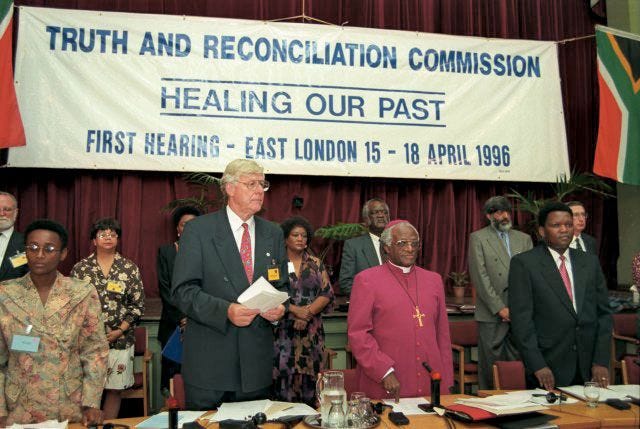
South African township journalists preserved testimony that powered the Truth and Reconciliation Commission.
Argentina’s Mothers of the Plaza de Mayo built databases of the disappeared long before democracy returned.
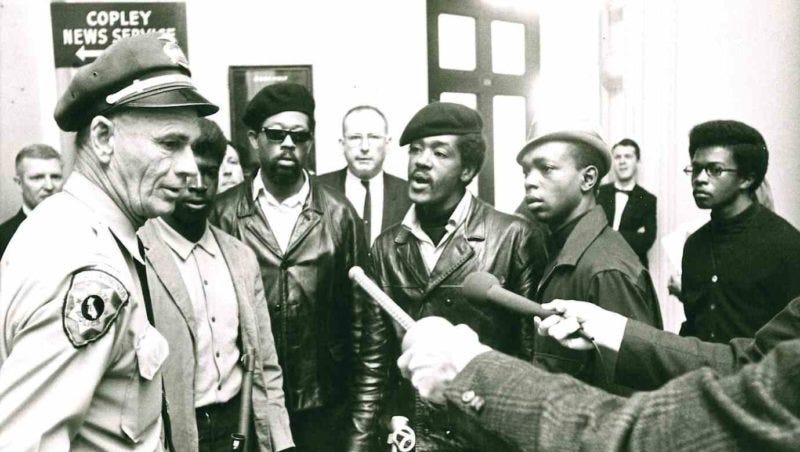
The Black Panther Party created copwatch tactics decades before body-camera mandates.
“Accountability is not an outcome. It is an infrastructure.”
These movements did not wait for permission.
They built the proof future justice required.
A Closing Manifesto
We are entering an era where impunity is not a malfunction—it is the method.
The response is not despair.
It is construction.
We must:
record what power wants forgotten
protect what power wants erased
organize where power cannot infiltrate
exercise the rights we still have
prepare for the tribunals and truth processes that will need the evidence we gather now
We build this infrastructure not because justice is guaranteed,
but because justice will be impossible without it.
This is the moment for archives, alliances, memory, and courage.
“The future will owe its justice to what we document today.”
Final Line
The record we build today is the justice their impunity cannot outrun tomorrow.
Author’s Note: This dispatch is written from occupied Chicago—a city living through the slow creep of federal overreach, militarized policing, and political abandonment, yet refusing to surrender its imagination or its agency. Here, resistance is not an act of defiance but a way of breathing. We document, we remember, and we build the future infrastructure of accountability because no one is coming to save us but us.